
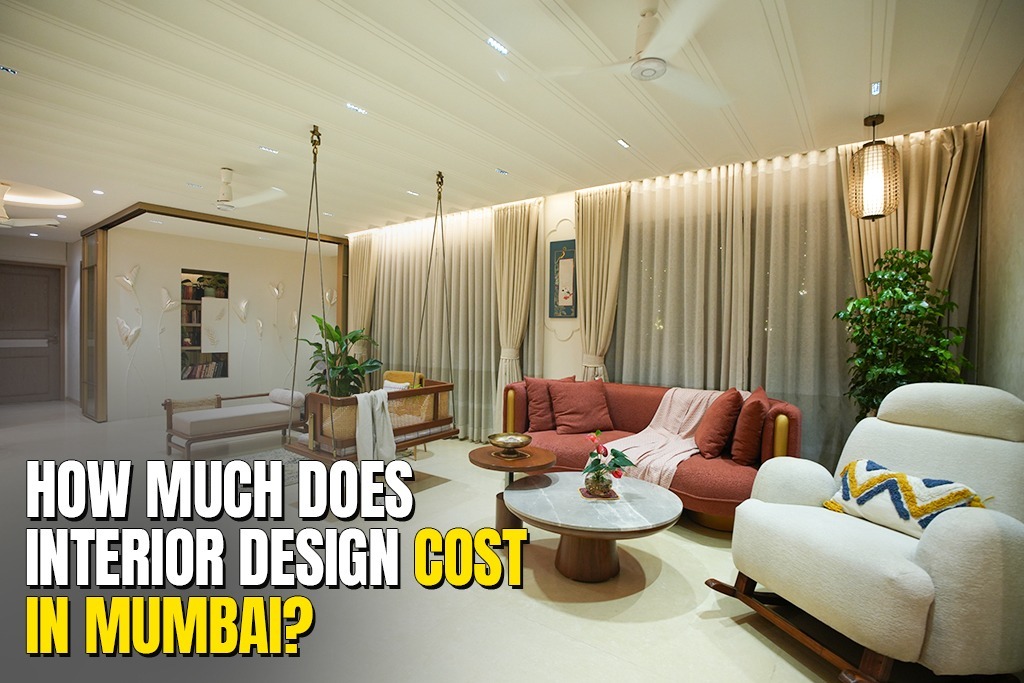
Ask three designers to quote for the same 2 BHK and you’ll likely get three very different numbers: ₹7 lakh from one, ₹12 lakh from another, maybe ₹18 lakh from a third. Each is usually pricing a different scope of work, different materials and a different level of finish, which is why the totals are hard to compare.
If you’re looking for an interior designer in Mumbai and want to know what a realistic budget looks like, this guide walks through typical costs by home size, where the money goes, and what to watch out for before you sign anything. All figures are approximate and will shift with your project, materials and designer.
Why Mumbai Costs More
Anyone who has renovated a flat here knows it’s pricier than most cities. Homes are compact, so storage and furniture often have to be custom-built to fit. A wardrobe that squeezes into an awkward alcove costs more than a ready-made one, but it also saves floor space you can’t afford to lose.
Labour is another factor. Skilled carpenters and electricians charge more, and getting materials up to a fourteenth-floor flat adds its own cost. Then there are society rules. Many buildings limit working hours, ask for deposits and ban noisy work on certain days, so projects often take longer than planned.
None of this means a good-looking home is out of reach. It just means the planning stage matters more than people expect.
Typical Interior Design Cost by Home Size
For a full-home interior covering woodwork, false ceiling, lighting, painting and basic furnishing, this is a fair ballpark:
| Home Type | Basic | Mid-Range | Premium |
| 1 BHK | ₹4-6 lakh | ₹6–9 lakh | ₹9 lakh+ |
| 2 BHK | ₹8–12 lakh | ₹12–18 lakh | ₹18 lakh+ |
| 3 BHK | ₹14–20 lakh | ₹20–30 lakh | ₹30 lakh+ |
| 4 BHK | ₹22–32 lakh | ₹32–50 lakh | ₹50 lakh+ |
Per square foot, basic work tends to run ₹1,500 – 2,200, mid-range finishes ₹2,200 – 3,500, and premium projects ₹3,500 – 6,000 or more.
Treat these as starting points rather than promises. A simple 2 BHK with standard finishes will sit near the bottom of its range. The same flat with imported fittings, home automation and bespoke furniture can overshoot the top. Bigger homes vary even more. In a 4 BHK, a separate study, a pooja room or a second living area can each add a serious chunk, so the final figure depends on how many of those spaces you want fully designed.
Where the Money Goes
Knowing the split helps you decide where to spend and where to hold back.
The kitchen is usually the costliest single area, anywhere from ₹1.5 lakh to ₹5 lakh or more. Much of that depends on the board material, the countertop and the hardware. Spend a little extra on good hinges and drawer channels, because they decide whether the kitchen still feels smooth five years later.
Wardrobes and storage typically cost ₹1,000 – 2,500 per square foot. In Mumbai, storage is often the main thing people need from a redesign, so sliding wardrobes, loft cabinets and under-bed drawers tend to pay for themselves.
False ceilings run roughly ₹80 – 200 per square foot. Lighting is worth planning properly alongside it, since a well-lit room can look better than one with expensive furniture and poor lighting.
A living room with a TV unit can cost anywhere from ₹60,000 to ₹3 lakh, depending on panelling, stone or veneer, and concealed lighting. Bedrooms generally fall between ₹1.5 and ₹4 lakh each, covering the bed, headboard, side tables, wardrobe and a dresser or study unit. Master bedrooms in 3 and 4 BHK homes usually land at the higher end because they often include a walk-in wardrobe.
Painting and wall finishes are about ₹25 – 60 per square foot, with textures and wallpapers costing more than plain emulsion.
One thing many first-time clients miss is that sofas, curtains, rugs and decor are often left out of the base quote. Ask early whether they’re included.
How Designers Charge
Most designers in the city follow one of three models.
The first is a percentage of the total project cost, usually 8% to 15%, which covers design, coordination and site supervision. The second is a design-only fee, often ₹100 – 300 per square foot, which suits people who plan to hire their own contractors. The third is a turnkey package, where one price covers design, execution and handover. Turnkey is popular because you deal with a single team, but read the inclusions line by line.
This matters most when you’re comparing the best interior designers in Mumbai. A lower quote isn’t always the cheaper option. If it leaves out electrical work, the false ceiling or the painting, you’ll end up paying for those separately and the gap closes quickly.
What Quietly Pushes the Budget Up
Material quality makes the biggest difference. Branded, moisture-resistant plywood costs more than local alternatives, but Mumbai’s humidity is hard on cheap boards, especially in kitchens and bathrooms. Swollen shutters within two monsoons are a common complaint.
The condition of your flat matters too. Older buildings in areas like Chembur, Ghatkopar and Tilak Nagar often need plumbing, rewiring or waterproofing before any design work can start. This is the most common source of unplanned expense, and it’s worth asking your designer to inspect the flat before finalising a quote.
Design complexity adds up as well. Curved panels, custom wall art and detailed mouldings take more time and a more skilled hand. And changing your mind halfway through is probably the fastest way to blow a budget, because anything already built has to be redone.
Smart Ways to Stretch Your Budget
Start by setting a realistic number and keep 10 – 15% aside for surprises. Almost every renovation has a few.
Decide your priorities next. Put the money into the kitchen, storage and lighting, since these are the things you’ll use and notice every day. Decor, artwork and accent furniture can be added slowly over the following months.
Always ask for an itemised quote that names materials, brands, finishes and quantities. Vague quotes make comparison impossible and leave room for disputes later. Linked to that, check the payment schedule. Payments should follow project milestones rather than being handed over mostly upfront.
If you can, visit a finished project or talk to a previous client. Photos only show the best angle, while a visit shows you the edges, the hardware and how the work has aged.
Finally, find out what warranty comes with the woodwork and finishes, and who to call if something goes wrong after handover.
Choosing the Right Design Partner
When you’re shortlisting an interior design company in Mumbai, price should be one factor among several. Pay attention to how the team talks to you. Do they ask how you actually live, such as how many people cook, whether you work from home, or where the kids do homework? Do they answer cost questions directly? Will you see 3D visuals or detailed layouts before work begins? Is there someone from the company supervising the site, or is everything handed to subcontractors?
A good designer will also say no occasionally. If an idea won’t suit your space or your budget, you want to hear that before it’s built.
Final Thoughts
Interior design in Mumbai is a significant investment, but it’s much less stressful when you understand what you’re paying for. Once you know what drives the numbers, it’s easier to decide where a premium is worth it, like kitchen hardware, and where you can save, like an expensive feature wall you’d barely look at.
The best next step is a straightforward conversation with a designer who takes the time to understand your space, your habits and your budget.
Planning a Home Makeover? Talk to Focus Design Studio
At Focus Design Studio, we help Mumbai homeowners turn their ideas into homes that work well and look good, with clear pricing and careful planning. Whether it’s a compact 1 BHK or a spacious 4 BHK family home, our team can walk you through options that fit your budget.
Visit us: A/1 Adarsh Nagar Society, Tilak Nagar, Chembur, Behind McDonald’s, Near Amachi Shala, Mumbai – 400089
Call us: 90825 69083
Call or drop by to discuss your project and get a detailed estimate.